Black Girls Are Not Collateral Damage: Reputation Protection Culture Harms Victims

When powerful men are accused of harming Black girls and women, there are too many who rush to protect the man’s name, career, music, legacy, and public image. But who protects the girl?
This post examines reputation protection culture, the pattern of defending beloved or powerful men while treating harmed Black girls as collateral damage. It also looks at the unfair burden placed on Black women journalists who are criticized for asking hard questions that others would rather avoid.

At the center is a deeper truth: protecting “the culture”-any culture- cannot mean abandoning Black girls. Their pain is not bad publicity, harmful to the community, or just a footnote. Their safety matters too. In this episode we speak that into being.

We also honor the courage of author Reshona Landfair, who has written a memoir about her experience of being Jane Doe-a child victim of celebrity R. Kelly—to now reclaiming her name publicly.
 

The Post-Racial Veil Is Gone: What Black Survivors Are Being Forced to Notice Now

The illusion of a “post-racial” America is gone. In this episode, Tonya GJ Prince explores what becomes visible when anti-Blackness steps out from behind polite language, institutional denial, and political performance.

She reflects on why this moment requires clear noticing, grounded speech, and refusal to be defined by those who benefit most from our silence.


That Feeling Was Information: Why Silence Serves Predators

Have you ever had a feeling about someone and talked yourself out of it? Not because nothing happened. But because you could not explain it cleanly yet. Maybe they were charming.
Maybe everyone else liked them.

Maybe they had a title, a platform, a collar, a badge, a family name, a reputation, or a room full of people ready to defend them. So you stayed quiet.

In this episode, Tonya GJ Prince speaks to the sacred importance of listening to your inner voice before fear, politeness, social pressure, or other people’s opinions train you to silence yourself. Predators do not always need everyone to believe them. Sometimes, they only need good people to doubt themselves.

This episode explores how silence can protect the wrong person, how danger often announces itself through patterns before proof, and why your discomfort deserves attention even when you do not yet have the perfect words. This is not about paranoia. It is about pattern literacy.

It is about honoring the pause, the hesitation, the body signal, the uneasy feeling, the quiet “something is not right here” that many Survivors later recognize as wisdom trying to rise. Your inner voice is not an inconvenience. It is part of your protection.

When Rosa Parks Becomes Trivia Instead of TRUTH

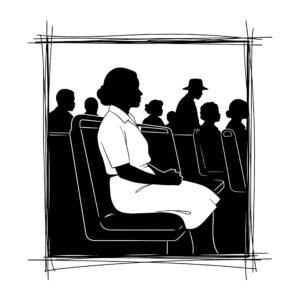
What happens when a woman who risked everything for dignity is reduced to a single, sanitized sentence? This episode confronts what gets erased when Rosa Parks is taught as trivia instead of truth.

With clarity, restraint, and emotional honesty, this reflection speaks to survivors, women, and Black, Indigenous, and Asian listeners who know what it means to carry history in the body while the world asks for a simpler story. This is not a lesson in symbols. It is a call back to courage, memory, and the full weight of what resistance costs.


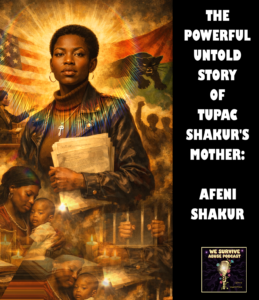
The Powerful Hidden Truth about Tupac Shakur’s Mother Afeni Shakur

Before the music,

before the fame, there was a mother whose strength shaped a voice that would move the world.

In this episode, we uncover the powerful and often overlooked story of Afeni Shakur — activist, revolutionary, and the woman who raised Tupac Shakur with purpose, pain, and unshakable conviction. From her role in the Black Panther Party to the personal battles she faced while raising one of the most influential artists of all time, Afeni’s story is one of resilience, sacrifice, and truth.

This is not just history — it’s a deeper look at the foundation behind Tupac’s message, his fire, and his legacy. To understand him, you must first understand her.

This episode invites you to listen differently, reflect deeper, and recognize the quiet power behind a global icon. The woman defended herself and her co-defendants as part of the Panther 21 while pregnant with Tupac.


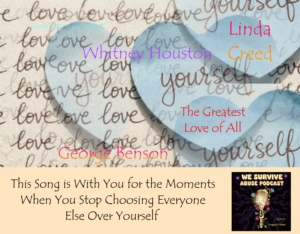
This Song Prepares You for What Happens When You Choose Yourself


What really happens when you choose yourself?

In this episode, we explore the deeper meaning behind The Greatest Love of All and the lived truth behind its message, shaped by songwriter Linda Creed.

This conversation moves beyond feel-good ideas of self-love and into the real-life impact of boundaries, self-respect, and personal change.

If you’re navigating growth, shifting relationships, or the discomfort that comes with choosing yourself, this episode offers language—and clarity—for what you’re experiencing.


Most people think self-love is soft. Gentle. Easy to celebrate.

But choosing yourself—truly choosing yourself—can disrupt relationships, unsettle expectations, and expose the quiet ways you were taught to shrink.

In this episode, we revisit The Greatest Love of All through the lens it deserves. Not as a background anthem, but as a message rooted in truth, written by Linda Creed during a time when life was asking something real of her.

This is a conversation about what happens after the decision.
When you stop over-explaining.
When you stop accepting less.
When you stop being easy to reach, easy to manage, easy to use.

Because choosing yourself is not the end of the story.
It’s the moment everything begins to rearrange.


Your Discomfort and Confusion Is Not More Important Than Her Pain

Your discomfort with her pain is not the emergency. Her pain is.

In this episode, we confront a growing pattern where women’s grief, fear, and lived reality are interrupted, questioned, or policed in real time. What happens when people demand clarity, neatness, or explanation from women who are reacting to harm?

This is a conversation about grief, respect, and what it means to center humanity over control.

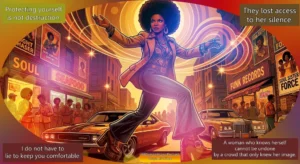
They Loved Ms. Foxy Just Fine -Until She Spoke Truth

They will celebrate you as long as you are palatable.
As long as your strength entertains them.
As long as your truth doesn’t disrupt anything.

But the moment you speak plainly, the room will shift.

This is not new.
This is how the world responds when women stop performing and start telling the truth.

This is a short story about Pam Grier and millions of women before and after her. Not everyone can handle the truth. 

Some of us are forced to, though.


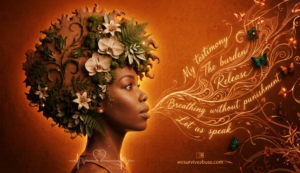
Stop Telling Black Women to Be Silent—Our Bodies Are Paying the Price.

Black women are not “overreacting”—we are responding to what our bodies have been forced to carry for generations. The pressure to ignore racism, to stay composed, to be endlessly strong is not harmless—it is physically costing us our health and our peace.

This is a call to shift the narrative: venting is not weakness, it is release. Naming harm is not division, it is clarity. And silence is not resilience—it is a risk.

Let Black women speak without correction. Let us process without punishment. Let us breathe without being told to endure what is slowly breaking us.


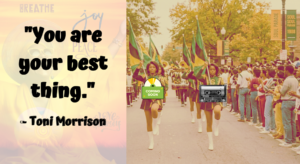
 Black Marching Band History: The Rhythm of Resistance

Our most recent podcast episode….. Black Marching Band History: The Rhythm of Resistance

Episode Summary
What happens when you take the rifle out of a soldier’s hand and replace it with an instrument? You don’t get silence—you get a revolution.

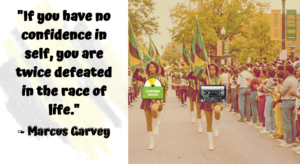
In this episode, Tonya GJ Prince deconstructs the hidden, radical history of the Black American marching band. We go back to a time where Black men were “relegated” to the band as a form of military restriction. We explore how those ancestors refused to be dull, transforming heavy conduit poles and brass instruments into a display of style, poise, and undeniable dignity that the world had never seen.

But the music didn’t just survive on the field; it survived because of the community that surrounded it. Tonya shares a deeply personal look into her own journey, honoring the specific Black women—the matriarchs and protectors—who stood as a human shield around the band members in her life.


You’re not being “the bigger person” when you allow disrespect to slide.

You’re being conditioned.

There is a difference.

Stay Woke When a Warning Word Is Turned to a Punchlline (podcast episode)

The journey through the history of the word “woke” and the danger of mocking warnings.Watching language warning about life or death flatten into a “trend”…. is frustrating. “‘Stay woke’ began as a warning, not a trend. This episode traces the word’s roots through the Scottsboro Boys, its journey across generations, and what happens when societies ridicule or erase the language of harm awareness. Because when warnings are mocked, shock often gathers at candlelight vigils.”


People Do Not Fear Your Inner World — They Fear Control

In this first episode back after hiatus, Tonya GJ Prince talks about how the beliefs of others have been used to override consent, sovereignty, and survival.

Excerpt……We are rarely disturbed by the private inner worlds of others.

What unsettles us is when someone:

uses their beliefs to override our consent

uses their pain to command our silence

uses their identity to demand our obedience

uses their healing to control our boundaries

uses their story to erase ours

  • That is no longer self-expression.
  • That is dominance dressed in meaning.